
How to Prepare for a Gallery Show (and Work Well With Your Curator)
As promised, here's the follow up post about what actually goes into preparing for a gallery show, using my recent duo exhibition at It's About Time Cultural Arts Center in Ferndale, Washington as the real world example.
Start With the Right Mindset
It helps to remember that a gallery is offering you an opportunity. Yes, they make money from your work, but think about everything they're taking on: securing the space, arranging publicity, and hosting a big opening party. When you really think about it, an art opening is a party you get to throw without paying for the food, the drinks, or the venue, and you get to invite whoever you want while your work hangs on the walls. That perspective makes the whole process feel a lot less transactional and a lot more collaborative.
The Timeline Can Be Tight
In my case, I was offered this two artist show without much notice. The gallery wanted the work hung by the end of July, and they didn't reach out until June, right when I happened to be on vacation. So when I got home, I wasn't just catching up on a full time job; I was also prepping an entire show in whatever free time I could find. It was a good problem to have, but it was still a lot.
Getting Your Prints Made
As soon as I got home, I ordered all my giclee canvas prints. Out of nineteen prints, three came back wrong, which meant an unexpected extra expense and a scramble to get replacements reprinted before the show. Aside from that hiccup, the printing company was responsive and delivered excellent, on-time prints, allowing me to sit with each one, embellish them with gold and silver pen, and attach hangers on the back. The lesson here was for me to slow down and thoroughly survey the proofs sent back.
I used deep gallery canvas wraps with a finished edge. The canvas-wrapped edge was usually a mirror of the main frontal image and 1 ½ inches deep. I was thrilled with how they turned out, and the best part is that no framing is necessary with this method, which saves both time and money.
Knowing What the Gallery Handles vs. What You Handle
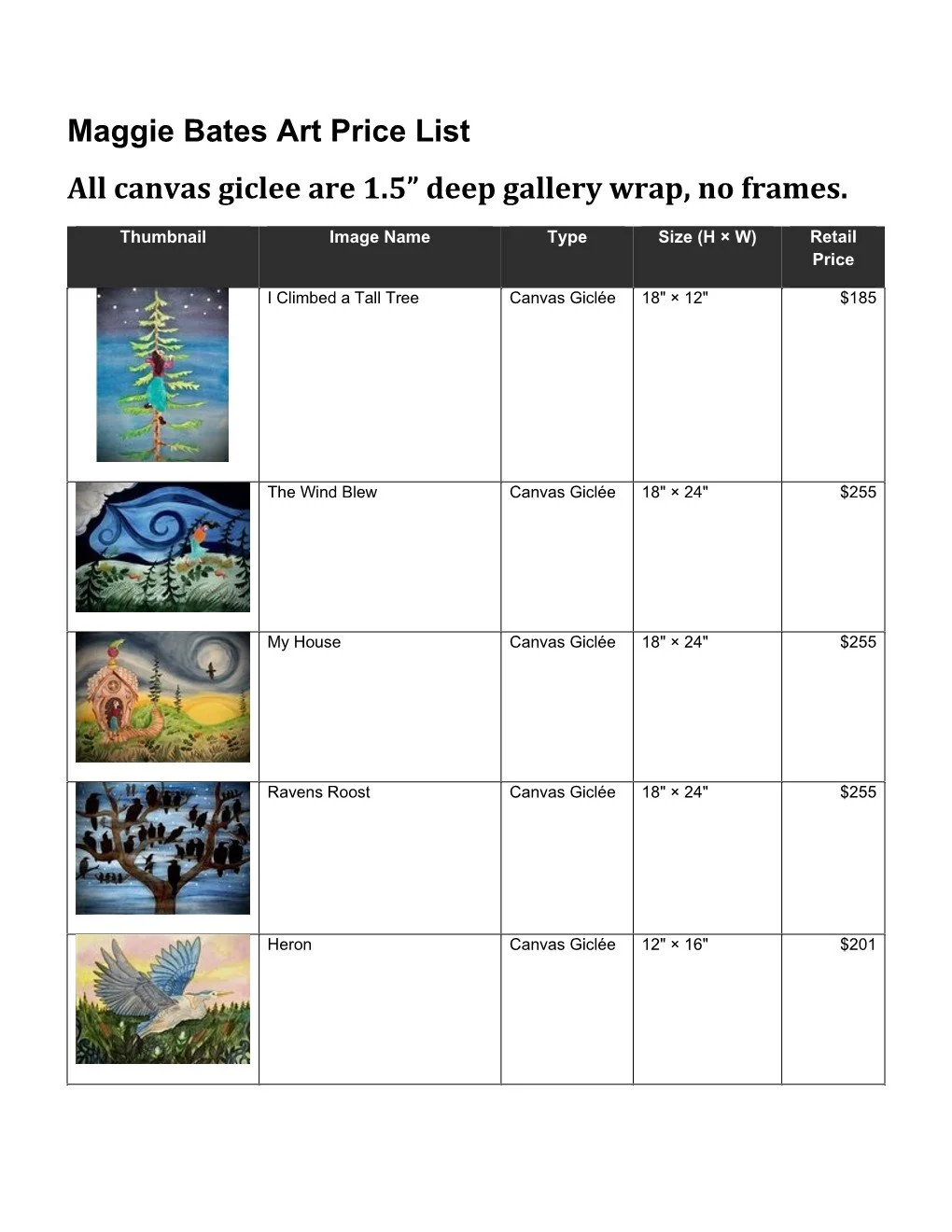
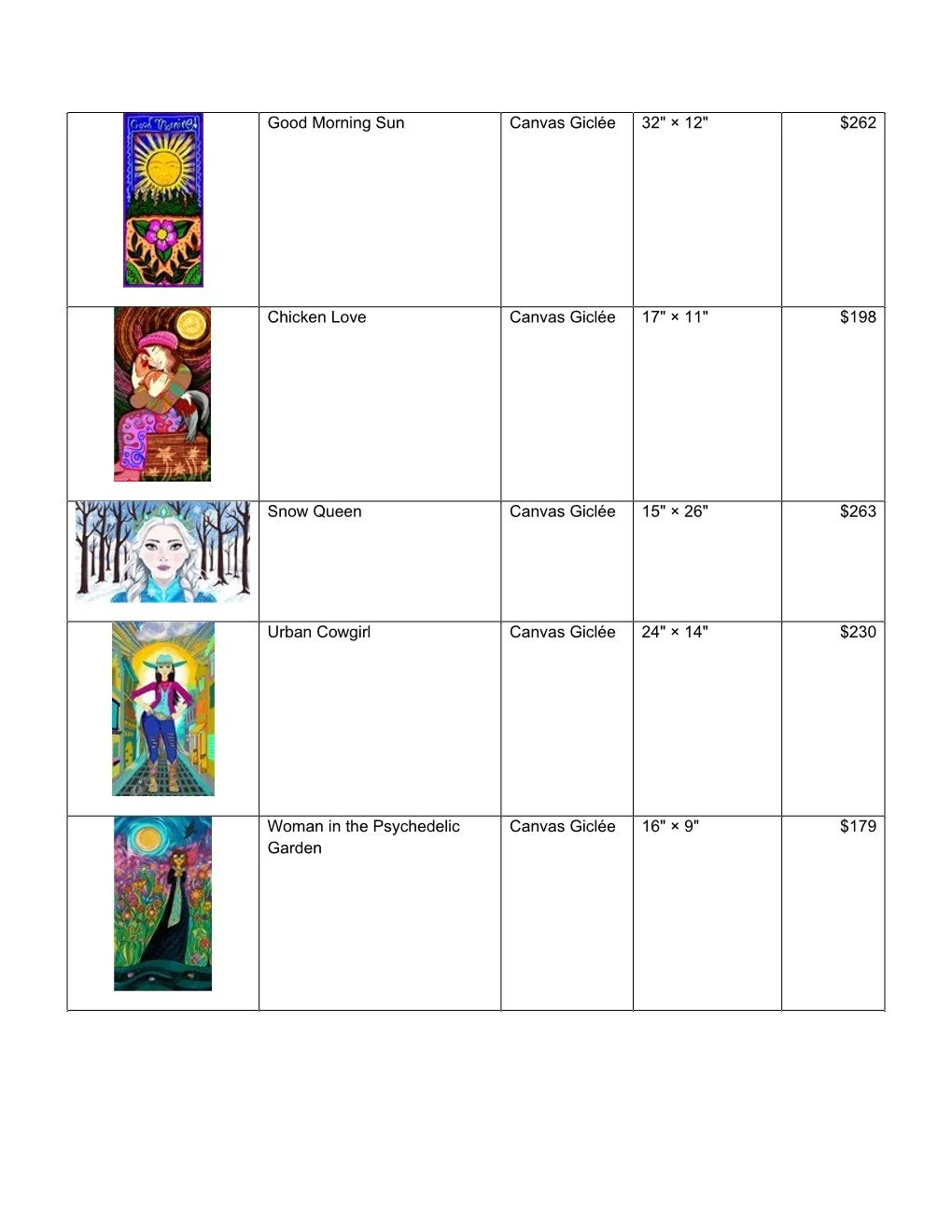
The gallery took on promoting the show, and of course they wanted me to share their promotional posts too, which I happily did. They also created all the tags for each piece, listing size, medium, and price, and they handled the actual hanging of the work, which is no small task.
My job was to hand off accurate information for every painting: name, size, price, and medium. I'll admit I goofed a little here; I got confused on a couple of sizes and transposed some numbers in the pricing. Thankfully, I caught the errors in time for the curator to fix them before the tags were printed. Lesson learned: double-check your list before you send it, since a mistake here becomes real work for someone else to undo.

Adding a Little Extra Interest
My show was a bit more involved because each painting also had a QR code that linked to a short video on my YouTube channel, mostly animated versions of the painting itself. It gave visitors a little extra layer of interest and fun as they moved through the gallery. Honestly though, at least on opening night, not many people looked at the YouTube videos with their phones; the paintings in front of them seemed to be enough to take in.
Don't Forget the Merch
The last piece was creating some flexibility for buyers who wanted to support the show without necessarily buying a full painting. I printed note cards and postcards, brought along copies of my children's book, and had stickers made too. That way, even someone on a tight budget could walk away with something and support the gallery for as little as three dollars.
The Takeaway
Preparing for a show is part logistics, part art making, and part trust in your gallery partners. Know your role, communicate clearly, double check your numbers, and don't be afraid to have a little fun with extras like QR codes or merch. It all adds up to a show that feels complete, both for you and for the people who walk through the door.
I'll close with this: keeping realistic expectations matters just as much as the prep work. The fact that a gallery wanted to show your art in the first place is already a huge win. Once the work is up, so many factors outside your control can affect sales: the economy, competing events on opening night, even the weather. One thing worth paying attention to up front is how much publicity the gallery is willing and able to put behind the show, since that can shape turnout more than almost anything else. And don’t forget to invite all of your friends and family. That makes the event so fun!
At the end of the day, I feel that selling even one piece is a success. I was lucky enough to have three buyers on my recent opening night, which felt wonderful. Now we'll see how the rest of the month goes. I think a blog on sales and expenses will be next. I'm looking forward to more gallery sales before the month ends; fingers crossed!